Proposed Project Title
Exploration and investigation of mineral deposits in the Kurdistan Region
Project Participants
Ass.Prof. Dr. Fraidoon Najm Rashid
Dr. Hiwa Hama Amin Mohammed
Dr. Rezhna Mohammed Kokha Mohammed
Chalak Ahmed Karim
Bakhtiar Ali Hamza
Introduction
In addition to its hydrocarbon resources, the Kurdistan Region possesses substantial deposits of valuable minerals and rocks that may serve as a source of domestic raw material for local industry or be exported for processing in international markets. The development of this sector holds considerable potential to generate revenue for the regional government, create local employment opportunities, improve living standards, and stimulate economic activity in the areas where these mineral resources are located.
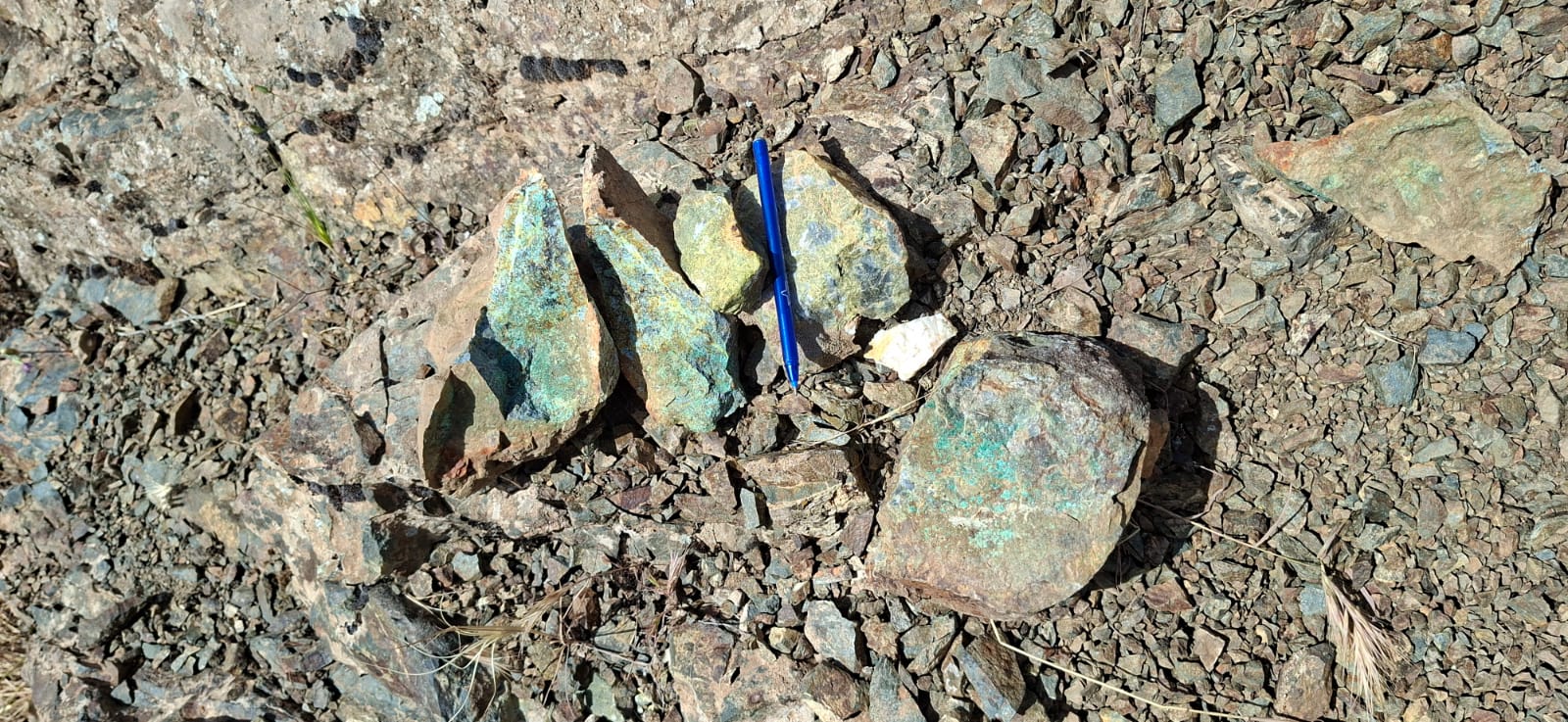
Owing to the region's structural geology and tectonic history, mineral ore occurrences are anticipated within the belt extending along the Imbricated Zones and the Zagros Suture Zone in the northern and northeastern parts of the Kurdistan Region of Iraq. This is attributable to faulting, deformation of rock sequences, and igneous activity associated with these structural belts, which collectively provide favorable conditions for the deposition and crystallization of mineral ores across mountainous terrain, valleys, river systems, and foothill zones. Minerals anticipated to occur within the region, in varying concentrations, include lead, zinc, iron, chromium, copper, nickel, manganese, and other associated ore deposits.
This strategic project aims to identify mineral types and their spatial distribution, and to compile the requisite data and information pertaining to them. The project will be implemented in phases over a 36-month period within the administrative boundaries of Sulaimani, Halabja, Erbil, and Duhok provinces, in collaboration with universities and other institutions of the Kurdistan Regional Government, and with reliance on local expertise and specialized personnel. The methodology comprises geological surveying, scientific exploration, and field investigations of the designated study areas; the resulting mineral occurrence data will be plotted on a dedicated map and compiled into a comprehensive database.
Objectives
Identifying natural resources: locating natural ore and mineral deposits across various areas of the Kurdistan Region through scientific and practical investigative methods.
Building a comprehensive database of mineral types in the Kurdistan Region, with particular focus on Sulaymaniyah and Halabja provinces.
Assessing economic value: evaluating the economic potential of identified minerals based on estimated deposit locations, extraction and transport requirements, and market refining costs.
Developing a robust analytical framework for processing the data and information obtained.
Producing a dedicated mineral distribution map for the Kurdistan Region to serve as a foundation for future exploration and extraction efforts.
Establishing a sound scientific basis to inform future government and investor decision-making in the mineral and natural resource sector.
Funding Provider
Kurdistan Institution for Strategic Studies and Scientific Research; Ministry of Higher Education and Scientific Research; Ministry of Natural Resources; Kurdistan Geological Society; or any other institution.
Project Budget
33,000,000 (thirty-three million) Iraqi Dinars.
Project Partners
Universities of the Kurdistan Region
Ministry of Natural Resources
Private sector companies and institutions
Project Beneficiaries
Ministry of Natural Resources, Kurdistan Regional Government
Private sector companies in the Kurdistan Region
Universities, institutes, and other higher education institutions in the Kurdistan Region
Planned Start Date
1/12/2025
Planned End Date
1/12/2028
Project Duration
36 months
Required Resources
Geological maps and data from the Ministry of Natural Resources
GIS systems and digital mapping
Studies previously conducted by universities in the Kurdistan Region and Iraq
Laboratories of the institution and universities
Requirements
Obtaining official approval from the Ministry of Natural Resources of the Kurdistan Regional Government to conduct field surveys and investigations across various areas.
Providing logistical and field equipment (e.g., GPS units, geological hammers, hand lenses, sample bags, etc.).
Arranging transport and accommodation for project team members.
Initial Steps
Reviewing previous studies and research conducted on various areas of the Kurdistan Region.
Identifying zones of ore distribution based on available prior information.
Developing a plan for exploration, fieldwork, sampling, and inspection at the locations designated for investigation.
Collecting samples and analyzing them using various laboratory methods.
Recording the obtained data in a dedicated project database.
Producing a mineral distribution map and preparing the final report.
Challenges
Limited access to remote and mountainous areas, due to poor road and transport infrastructure and constrained communications.
Obtaining security clearance and border guard approval for certain search and investigation areas.
The presence of landmines and unexploded ordnance in some border areas and remote villages.
Securing the consent of villagers and local residents to permit fieldwork activities.
The need to send certain samples abroad for specialized laboratory analysis.
Attachments
Work plan form
Data collection form
Budget disclosure form